Free · seven prompts a day

Krillion

Seven prompts a day, scored on how rarely you answer

A free trivia game built on one awkward fact about knowing things: the name that arrives first is the name everyone else typed too. Seven prompts appear for every player at once, each answer gets about twenty seconds, and the recognised name fewer people reach for is the one that sends your dive deeper.

  • 01Seven shared prompts, one attempt a day
  • 02About 20 seconds for each answer
  • 03Ten metres of depth for every point
  • 04Runs in the browser, no account
01

The first name that arrives is the popular one

Recognition is quick and widely shared. Whatever you think of immediately is usually what most other players type as well.

Krillion is scored on the distance between that answer and a valid one you had to reach for. Only the second moves you down.

Krillion game@krillion

One set of seven prompts, shared by everyone

On Krillion, the Daily Dive is a fixed run of seven prompts, and every player sees the same ones in the same order. Each prompt names the kind of answer it wants, then adds a condition, so a city is not a country and a director is not a film. The set follows the UTC day, which makes the date printed in the game the one to trust. One attempt is recorded per day; a second run has to happen in another mode.
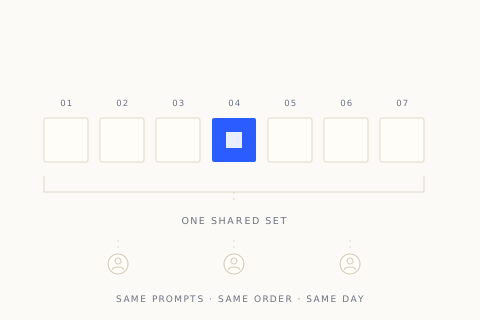
Seven numbered prompt slots in a row, all identical except one highlighted in blue
Krillion game@krillion

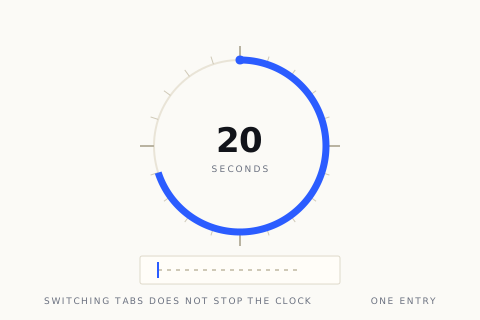
Twenty seconds leaves no room to check

Each prompt gives roughly twenty seconds, long enough to recall a name and too short to look one up. Type something the answer bank does not recognise and you may get another try while time remains, so a time-out and an unaccepted name are different failures. Switching tabs does not pause the clock. Most points lost here come from hesitation, not ignorance.

A twenty-second clock ring with a blue arc sweeping past three quarters of the dial
Krillion game@krillion

Scores come from a fixed answer bank

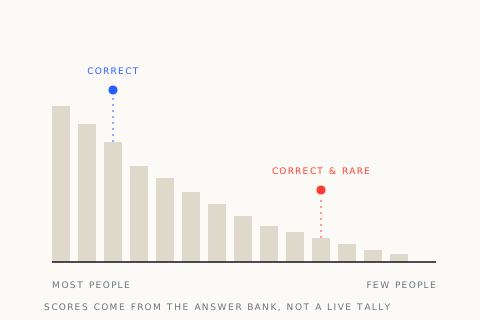
A correct answer is the minimum. Among recognised answers the less obvious one is worth more, and that ranking is read from the game's answer bank rather than counted from what today's players typed. A name being unfamiliar to you does not make it rare, and a misspelling does not make it a better answer. If a prompt is missing a name you are sure exists, report it with a source.

A long-tailed bar chart of answer frequency with a blue mark near the tall end and a red mark in the tail
Krillion game@krillion

Depth turns seven small differences into one number

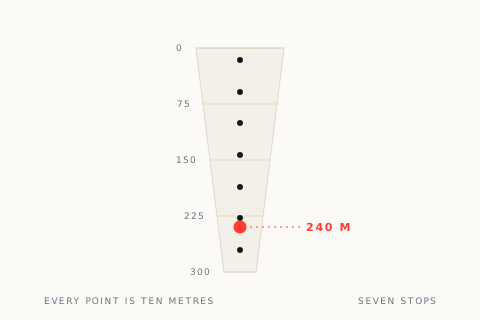
Every point becomes ten metres of dive, so a seven-prompt run reads as a single descent toward the trench floor. The gauge is a scoreboard wearing a diving suit: not a distance travelled, not a count of how many players chose your answer. It does make a narrow gap legible, since two rounds that feel equally good separate the moment one lands at 180 m and the other at 320 m.

A vertical depth shaft with metre ticks, seven stops along it and a red marker just above the floor
Krillion game@krillion

Read the prompt as a thing plus a condition

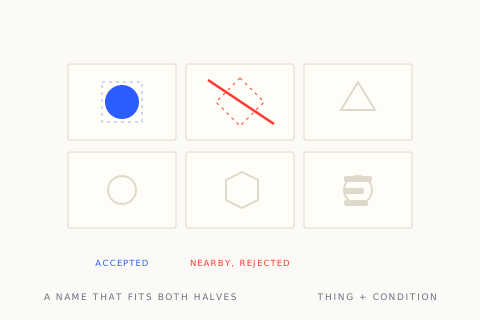
Most misses are category misses. The prompt asks for a river and the answer is a city standing on it; it asks for a competition and the answer is a team inside it. Name three candidates before committing, keep the safest in reserve, and spend the rest of the clock testing whether a fourth fits both halves. The guides call this working up the specificity ladder.

A six-cell category grid with one blue shape matching its frame and one red shape rejected
Krillion game@krillion

Endless Dive and the other runs

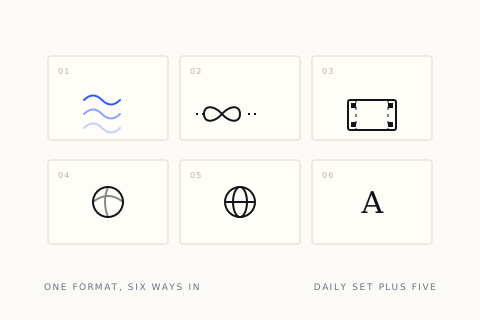
Endless Dive is the mode players search for as Krillion Unlimited: another seven mixed prompts with no daily limit, drawn from a finite pool that starts repeating once it is exhausted. Movies, Sports, Geography and Language each narrow the subject; Language turns the round into word conditions such as letters, length or meaning. Duel sends a link: seven prompts at fifteen seconds, and identical answers halve both scores.

Six small mode tiles showing waves, an infinity loop, a film frame, a ball, a globe and a letter
Krillion game@krillion

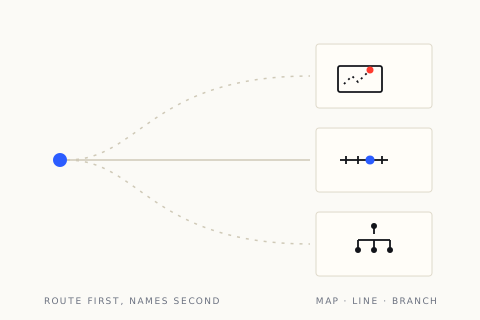
The library teaches routes, not answer lists

Twenty field guides sit behind the game, and none of them is a list to memorise. Each builds a route into a subject — a map from continent to place, a timeline, a classification branch, a production team — then tests whether that route still produces names under a clock. The strategy pieces treat confidence and category fit as judgements, not as measured popularity.

Three branching study routes leaving one node and ending in a map, a timeline and a classification tree
02

What a round asks of you

Seven prompts, one clock and a score you can trace back to a single choice.

01

A fixed set, not a random draw

The daily run holds seven prompts in the same order for every player. Comparing depth with someone else means comparing choices, not luck.

02

Twenty seconds per prompt

The clock starts with the prompt and keeps running when you leave the tab. An unrecognised answer can be retried while time remains; running out is a separate miss.

03

Rarity read from a bank

Recognised answers that fewer players would reach score higher. The ranking comes from the game's answer bank, not from a live tally of today's entries.

04

Depth instead of a percentage

Each point adds ten metres, so a whole run resolves into one descent. It displays a total; it does not measure water or popularity.

05

More runs after the daily one

Endless Dive, Movies, Sports, Geography, Language and Duel keep Krillion's seven-prompt format and change only the subject, the pool or the time limit.

06

Progress in this browser only

A saved game belongs to an anonymous cookie in the browser you played in. Another device starts fresh, and clearing cookies loses the round you were holding.

07

Twenty guides beside the game

Category mapping, the twenty-second decision, spelling and a post-game review routine, written for practice rather than for memorising answers.

03

How a dive runs

Four steps from prompt to depth, in about two and a half minutes.

  1. Read the condition

    The prompt names a kind of answer and a limit around it. Decide which of the two you are being asked for before a name arrives.

  2. Enter one clear answer

    Type a name, not a sentence. If the bank does not recognise it and the clock is still moving, you can try again.

  3. Watch the depth move

    The prompt scores, the next one loads and the gauge adds ten metres for every point the answer earned.

  4. Read the last screen

    The run closes on a total depth. A miss caused by the clock looks different from one caused by a name nobody counts as rare.

04

Notes from the daily set

Three habits that changed how people answer.

I stopped typing my first idea. Naming three candidates before committing moved my usual depth from about 150 m to 300 m.
IBIlse B.Plays at lunch
A capital-city prompt kept catching me. I was recalling the country and stopping there, which is only half of what was asked.
TRTomas R.Geography and Sports
Fifteen seconds exposes the habit. My brother and I picked the same obvious answer and both lost half the score.
NFNadia F.Duels most evenings
05

Questions about the daily game

Rules, scoring and the details that decide a close run.

How deep can you go today?

Seven prompts, one attempt and roughly twenty seconds per answer. The dive opens in a tab and ends wherever your choices put it.

Begin a dive